

Waterjet CNC Cutting: Benefits, Applications & Materials Guide
Why More Fabricators Are Adding Waterjet to the Shop Floor
A shop that only cuts with plasma or laser eventually runs into a job it can’t take. Maybe it’s a stone inlay, a titanium bracket that can’t tolerate heat distortion, or a customer asking for tolerances the current equipment simply can’t hold. That’s usually the moment waterjet CNC cutting enters the conversation.
The appeal comes down to one property: there’s no heat involved. A waterjet erodes material with a high-pressure stream of water, often carrying garnet abrasive, rather than melting or burning through it. No thermal stress means no warping, no discoloration along the edge, and no change to the material’s temper. It’s a mechanical process, not a thermal one — and that changes what’s possible.
Where it earns its keep
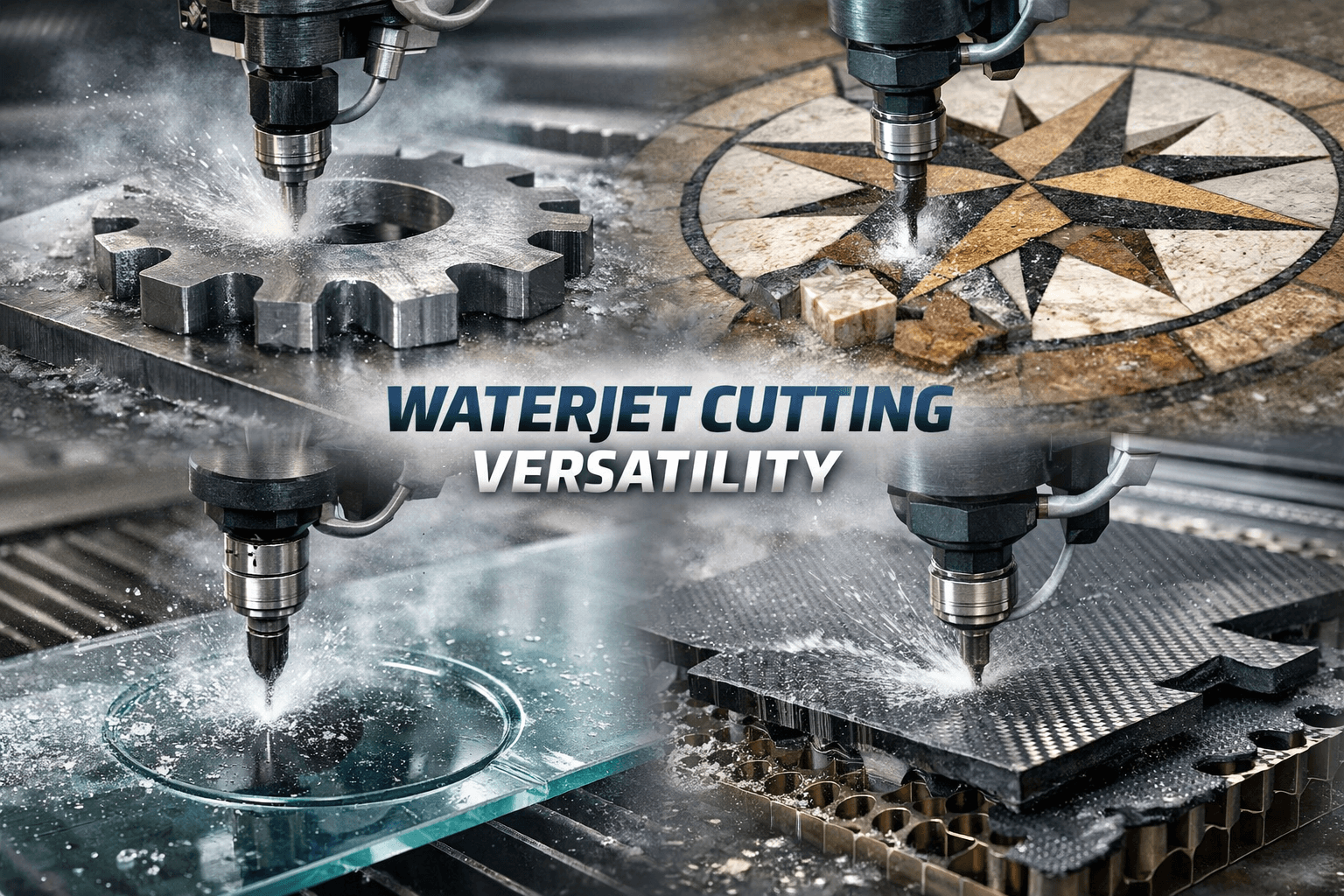
Metal shops use it on stainless steel, aluminum, titanium, and hardened tool steel, cutting at full thickness without softening the material the way a laser or plasma torch would. Stone fabricators lean on it for the kind of detailed inlay and medallion work that a saw blade can’t replicate — countertop cutouts, mosaics, architectural facades.
Glass and ceramics, both prone to cracking under thermal stress, cut cleanly because there’s no heat to cause that stress in the first place. Even composites and rubber hold their structural integrity through the cut.
Aerospace suppliers are a good example of who benefits most. When you’re machining titanium or a layered composite, a heat-affected zone isn’t a minor inconvenience — it can mean scrapping the part. Automotive suppliers cutting gaskets and interior trim have a similar concern, just at lower stakes. And stone fabricators, a segment that’s grown steadily in recent years, increasingly treat waterjet as standard equipment rather than a specialty add-on.
The numbers behind the decision
Beyond what it can cut, waterjet tends to pay for itself in ways that don’t show up until you look at total job cost. Clean edges usually mean skipping a deburring or grinding step. Tight tolerances cut down on scrap. And because one machine handles metal, stone, and glass, a shop can take on a wider range of work without buying three separate machines or losing floor space to equipment that only cuts one material category.
That’s the thinking behind Jekran’s waterjet CNC machines — built so a shop can move between job types without retooling every time the material changes.
The pump is where it either works or doesn’t
None of this matters much if the pump underneath the machine can’t hold pressure. A Direct Servo Drive pump, like the Direct Servo Drive 4000 bar pump Jekran builds, skips the bypass circuit that older intensifier pumps rely on to regulate output. Less wasted energy, steadier pressure, lower running cost over the life of the machine — that’s the difference between a waterjet system that’s genuinely competitive on cost-per-part and one that only looks good on paper.
For context on where the technology has landed industry-wide, the WaterJet Technology Association tracks its expansion well beyond pure cutting — into cleaning, surface prep, and even hydrodemolition, a sign of how far the underlying technology has been pushed since its early industrial applications.
If your shop is turning away jobs because of material limits, or spending too much on secondary finishing, it’s worth running the numbers on waterjet. For a lot of fabricators, it stops being a “someday” purchase pretty quickly.
Frequently Asked Questions
What materials can a waterjet CNC machine cut?
Nearly anything — metal, stone, glass, rubber, composites, even food products — up to several inches thick depending on the machine and pump.
Does waterjet cutting leave a heat-affected zone?
No. The process is entirely cold, so there’s no warping, discoloration, or change to the material’s metallurgical properties.
How thick can waterjet cutting go?
Anywhere from paper-thin sheet to 150mm (6 inches) or more, depending on material and pump capability.
Is waterjet worthwhile for small production runs?
Yes — there’s no tooling or die to set up, which makes it well suited to one-off parts and prototyping, not just high-volume runs.
What’s the difference between pure waterjet and abrasive waterjet?
Pure water alone cuts soft materials like foam and rubber. Adding garnet abrasive to the stream is what allows it to cut metal, stone, and glass.
How much does pump technology actually affect performance?
More than most buyers expect. Pump type determines pressure consistency, energy use, and cutting speed — a Direct Servo Drive pump avoids the losses built into older intensifier designs.