Hybrid Cutting Workflows: Why More Fabricators Are Pairing Laser and Waterjet
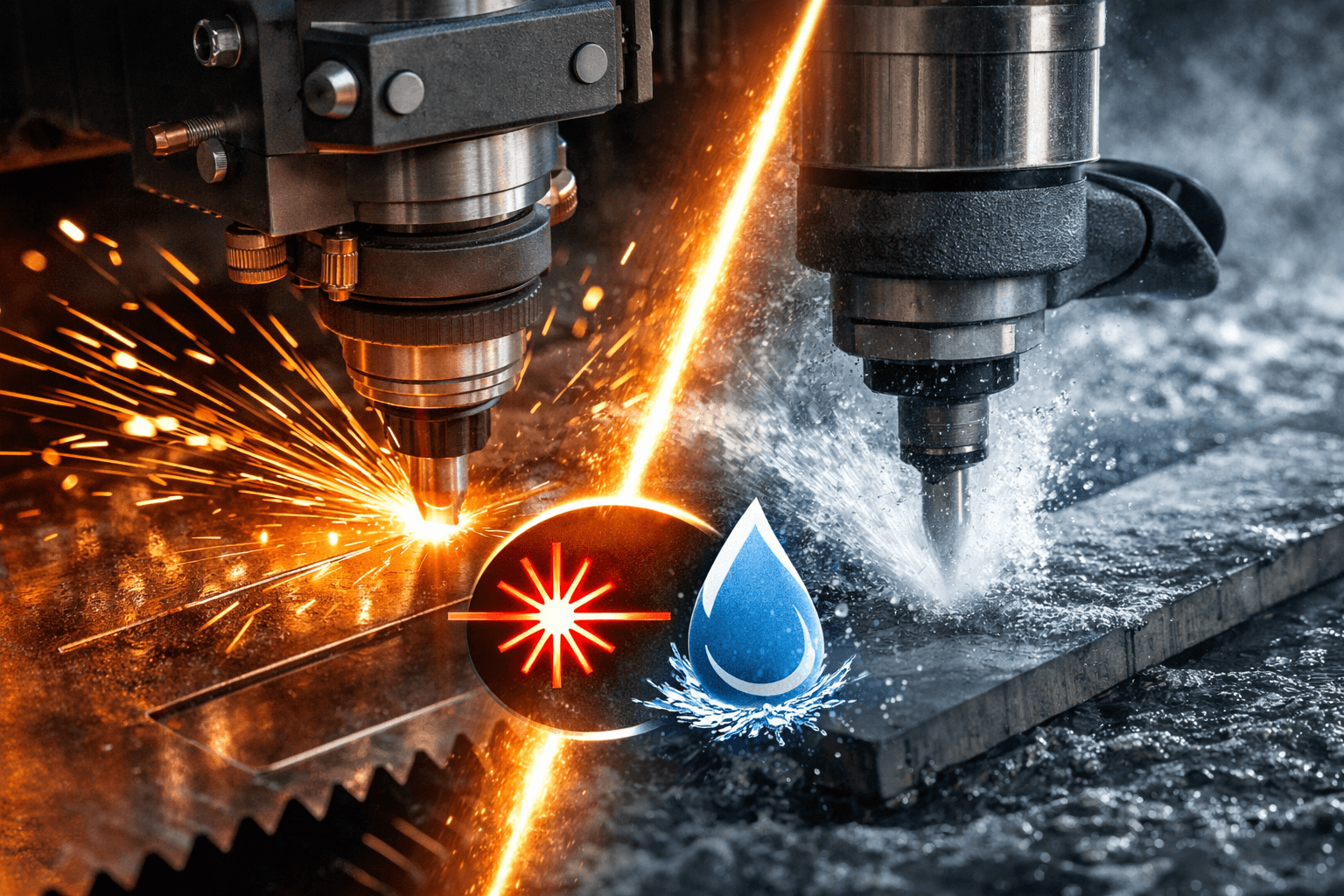
Fabrication has always been about choosing the right tool for the job. Anyone who works with metals, composites, or mixed‑material assemblies knows that no single cutting technology handles everything perfectly. Laser cutting delivers incredible speed and precision on thin metals. Waterjet cutting, on the other hand, can process thick, layered, or heat‑sensitive materials without distortion.
Instead of forcing one machine to do everything, more shops are now combining both. When coordinated properly, a hybrid workflow can outperform either technology on its own — delivering better quality, faster turnaround, and more flexibility.
Why Hybrid Cutting Is Growing So Quickly
Fabrication work has changed. A single project might involve stainless steel, polycarbonate, composite layers, or decorative materials — all with different thicknesses and tolerances. Customers expect shorter lead times, cleaner results, and fewer compromises.
Hybrid workflows are becoming popular because they solve these pressures directly: they allow shops to handle diverse materials efficiently, meet tight deadlines, and reduce unnecessary wear on equipment. It’s not a trend — it’s a practical response to the way modern fabrication operates.
How a Hybrid Workflow Actually Works
A hybrid workflow doesn’t require a single machine that does everything. Most shops simply coordinate two systems in a smart sequence:
- Laser Cutting Stage Used for fast profiling, fine details, and thin sections.
- Waterjet Cutting Stage Used for thick materials, composites, or anything that can’t tolerate heat.
This combination also solves a common issue: lasers can leave a heat‑affected zone, while waterjet cutting leaves none. Using waterjet for the final pass preserves material integrity and avoids thermal distortion.
A real example: a client producing custom machine enclosures laser‑cut the steel sections, then waterjet‑cut the polycarbonate inserts. The result was a 35% reduction in lead time and a 20% drop in scrap.
At Jekran, we see this pattern every day — many of our clients rely on both technologies, and our own product range reflects that. Supporting laser and waterjet workflows side‑by‑side has become a natural part of how we help shops expand their capabilities.
The Commercial Value Behind Hybrid Cutting
The strength of hybrid workflows is simple: each technology does what it does best. The laser handles speed and precision; the waterjet handles versatility and clean, heat‑free edges. Together, they deliver higher‑quality parts with fewer compromises.
This approach also improves turnaround times. When neither machine is pushed beyond its ideal range, jobs move through the shop faster and more predictably.
Material flexibility is another major advantage. Stainless steel, carbon fiber, stone, acrylic, layered assemblies — hybrid workflows allow shops to take on work that would be slow, expensive, or simply impossible with a single cutting method.
And because each machine is used more efficiently, operating costs drop. Abrasive consumption decreases, and laser optics last longer when they’re not forced to cut thick materials all day.
Where Hybrid Cutting Makes the Biggest Impact
Some industries naturally benefit from combining laser and waterjet:
- Aerospace, where titanium and composite assemblies must be cut cleanly and without distortion
- Automotive, especially for parts combining thin sheet metal with thicker structural elements
- Architectural fabrication, where metal, stone, and glass often appear in the same project
These sectors rely heavily on mixed materials and tight tolerances — exactly where hybrid workflows shine.
Challenges — and How Shops Solve Them
Hybrid workflows aren’t complicated, but they do require coordination. Parts must move cleanly from one machine to the next, and alignment has to be precise. The main challenges are workflow coordination, calibration, and operator training.
Fortunately, the solutions are straightforward. Job‑tracking software keeps transitions organised. Precision fixturing ensures repeatability. Cross‑training operators builds confidence and consistency. These are practical steps that any shop can implement without major disruption.
The Future of Hybrid Cutting
Automation is pushing hybrid workflows even further. Single‑platform hybrid machines, AI‑driven process selection, and automated material handling are already emerging. The direction is clear: less manual handling, more intelligent sequencing, and deeper integration between cutting stages.
Conclusion
Hybrid cutting isn’t a workaround — it’s a smarter, more flexible way to work. By combining laser and waterjet technologies, fabrication shops can deliver higher quality, faster turnaround, and greater material versatility while keeping operating costs under control.
For companies exploring this transition, Jekran is already supporting both technologies — from high‑precision waterjet systems to our expanding laser cutting line. Whether a shop needs guidance, equipment, or a complete workflow strategy, we’re positioned to help them get there.
In a competitive market, that combination can be the difference between winning and losing a contract.
Frequently Asked Questions
Why combine laser and waterjet cutting?
To leverage the speed and precision of laser cutting with the versatility and heat free processing of waterjet cutting.
Does hybrid cutting save money?
Yes. Using each method only where it’s most efficient reduces waste, tool wear, and production time.
Do I need special equipment?
Not necessarily. Many shops coordinate between separate machines, though integrated hybrid systems exist.
Which industries benefit most?
Aerospace, automotive, architectural fabrication, and signage are key sectors using hybrid workflows.
Can hybrid workflows be automated?
Yes. With the right material handling and job tracking systems, hybrid processes can run with minimal manual intervention.